Intro
Benjamin Franklin's one-fluid theory of electricity in 1747 proposed that excess or deficiency of a single "electrical fluid" created the phenomena he termed positive and negative charges. Michael Faraday's research in electrochemistry in 1831 established that charged particles (he named ions travellers in 1834) were responsible for electrical current in solutions. Telegraph and Railway Time followed, then Maxwell's Electro-Magnetic Waves in 1865.
Electrons were artificially observed in 1897 with speed recorded via electromagnetic waves and having a mass 1,000 times less than the hydrogen atom. The proton followed in 1920. Note, an electron's wavefunction always requires a 720-degree "rotation" to come back to its North-South / South-North starting point as it orbits a proton, but being point-like (zero dimensional) these "spins" are not like planets. "Bosons" e.g. Photons with full integer "spin" were named by Paul Dirac in 1947.
Main Body
Volt was invented in 1861 as a unit of Electromotive Force while Ohms measured Resistance and Farads defined a massive one-volt one-megohm one-second charge.
After 1873 Farads measured Capacitance e.g. 300 Farads x 12 Ohms starting at 12 Volts (and 1 Amp) would run a current for 1 hour, before dropping to 4.41 Volts and 0.37 Amps. See Farad below.
Amp in 1881 became charge movement per second, while Coulomb became the new unit.
The formula I = V/R in a closed circuit means Current (I) = Voltage (V) divided by Resistance (R), with I based on "Intensité de Courant" (French).
This is known as Ohm's law, defined by Georg Ohm in 1827, and by the 1850s widely known, considered proved.
Current's new name Amps.
Watt was defined the following year, in 1882, as the unit of power with the related term Joule suggested the same time, as the unit of heat. The joule and the watt were adopted in 1889.
W (joules per second) = V (joules per coulomb) x A (coulombs per second) where W is watts, V is volts, and A is amperes of current.
Farad became a derived unit where volts (V) x farads of capacitance (C) = coulomb qty (Q) of charge. Named after physicist Michael Faraday for physical storage of charge in capacitors. One Farad describes a case of two oppositely charged plates, each with a coulomb of charge and a potential difference of one volt between them.
Why is your answer in seconds when you multiply ohms times farads using T=RC?
By Ohm’s law, resistance is inversely proportional to current which is coulombs per second (charge movement per second). C measures total units in coulombs. What’s left after the "units" math is seconds.
A photon can carry any amount of energy, from virtually zero to infinitely large.
Background
In 1900 Max Planck quantified the smallest unit of heat change or "action" as 6.626 × 10⁻³⁴ joule per hertz (joule seconds).
In 1905 Albert Einstein associated this quantum or minimal element of the energy, to the electromagnetic wave itself.
Between 1925-1930 the photon became its favoured name, a force carrier having no mass but possessing energy (size) and momentum (direction), with visible light measured at 10−19 joule. In modern physics, its repulsion of two electrons is described by a scattering process, where the two electrons bounce off one another through the passing of an intermediate photon.
Electronvolt
An associated term that also developed in France in 1925-1930 was the electronvolt or eV, defined as 1.6 x 10⁻¹⁹ Joule.
One eV corresponds to an infrared photon with a wavelength of 1,240 nm nanometres and a frequency of 241.8 Terahertz THz Trillion Hz.
As an electron's wavefunction requires a 720-degree rotation to come back to its starting point, click here for Dirac's belt trick on the electron.
See too their closeness to the Greek word "Pneuma" and Hebrew "Ruach". Translated in English as "Spirit", meaning a blast of air.
John 3:8 "The wind (pneuma) blows where it wishes, and you hear the sound of it, but cannot tell where it comes from and where it goes. So is everyone who is born of the Spirit (Pneuma)."
Acts 2:2 "a sound from heaven, as of a rushing mighty wind"
Max Planck back in 1900 linked radiation energy (temperature) to gravity and light
He intertwined temperature, gravity, and light by inventing a system of natural measurement called Planck units. By combining these fundamental constants, he is seen to have proved that at the most extreme scale, thermodynamics, relativity, and quantum mechanics fuse together.
The Intertwined Constants
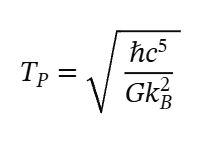
When he factored in the Boltzmann constant (kB), which governs temperature and thermal energy, he unlocked the Planck temperature (TP):
Under Planck's Radiation Law it formalised how a "blackbody" (an idealized physical object) emitted electromagnetic radiation at various wavelengths based entirely on its temperature, as its temperature rose, the intensity of its emitted radiation increased. Crucially, the peak of this emitted energy shifted toward shorter wavelengths (from invisible infrared to visible red, yellow, and blue-white light). Because the radiation spectrum depended uniquely on temperature, devices could measure a surface's temperature instantly from a distance without physical contact.
The Planck Temperature: 1.417 x 1032 based on the formula above
often referred to as "Absolute Hot", this represents the theoretical maximum temperature possible.
** End of Page